Sunday, November 24, 2013

A day of exploring…

Yesterday the sun was shining…most of the day…and we decided to make a trip to Inverary.  There is a castle there which is supposed to be quite nice.  We learned that the castle is not open for tours from October to March but decided to go for a ride anyway.  The goal was to drive to Dumbarton and then up along Loch Lomond and then over to Inverary.  Just to put this in perspective I have included a map.


People in Scotland would think we were daft (crazy) to make this trip in one day, but it isn't really that far...about 110 miles one way.

We drove to Dumbarton to find the castle.  Dumbarton Rock is located on the Firth of the Clyde where the River Leven empties and is a volcanic outcropping.  The history of this castle reaches back nearly 1500 years.  They have discovered artifacts dating from the Romans.  According to tradition, in about 450 A.D. St Patrick wrote to King Ceretic of Strathclyde reprimanding him for attacking Irish converts.

 
This is what the "Rock" looks like from the Clyde.  We were able to hike up to the top of the right side to see the view of Glasgow and down to Greenock.
 
 
You can see from this poster that the "Rock" is really that...just a big rock sitting at the mouth of the River Leven.  Structures were added to the location over the years.  From the13th century forward the "Castle" was used for different purposes.


This is the Guard House which dates to the 16th century.  It is built between to two craigs and you walk through a passage under the house to get to the upper levels of the rock.

 
Up on top one can see Glasgow to the East, Greenock to the West, and Ben Lomond to the North.  The day was somewhat overcast when looking up or down the Clyde.

 
They are doing some repairs to the house which was built in front in 1735
 
From Dumbarton we drove along Loch Lomond to Ben Lomond.  Then we turned west and headed for Inverary.
 
 
This is Ben Lomond.  As we climbed in altitude we had more cloud cover move in which added to the beauty of the day.  Yes, that is snow on Ben Lomond.  The top of Ben Lomond is about 3,200 feet.  It sits on the eastern shore of Loch Lomond.  On a clear day one can see Ben Lomond from Stirling Castle.
 
 
From Ben Lomond we turned west and went through a beautiful canyon as we came to the summit and started down the other side we viewed the scene above.  We thought we had found Brigadoon.  As we came down the hill we found Loch Long.  The water was unbelievably calm

 
The reflection off the water was incredible.  We drove around the tip of this loch and headed to Loch Fyne and the town of Inverary.  The town almost looked like a fairytale city with the low hanging clouds. 
 
 
This is the village of Inverary from across Loch Fyne.  Most all the buildings in the main part of town were painted white.
 
 
This loch also was just like glass.  Everywhere I looked I wanted to take another picture because of the amazing reflections that were seen.

 
It was a beautiful little village...much smaller than I had imagined it would have been.

 
This was a one-lane bridge with traffic controlled by stop lights to avoid a collision.

 
We left as the sun was getting close to the horizon.   I looked back at the town just after crossing the bridge and had to take this picture.  The loch had stayed this calm...like glass...for all afternoon.  This was taken at about 2:30 p.m.  Now it is nearly dark between 4:00 and 4:30 p.m.

 
We headed back towards Dumbarton and passed Ben Lomond and Loch Lomond as the sun was starting to set.  This picture was taken about 3:30 p.m.

 
We left Loch Lomond and headed to Dumbarton and then back to Edinburgh on the M8 Motorway.  It was a grand day...one of those days I wish I could do a "brain video download" so you could really see all the beauty of this country.  These pictures don't do it justice and I have about 45 more taken during the trip that are just as amazing as these.


Sunday, November 10, 2013

Tomorrow is "Remembrance Day"...


November 11th is Armistice Day, or Veteran’s Day, or so it is called in the United States.  For most of my life growing up, Armistice Day was pretty much a “non-holiday”, (except for Federal employees), and a day where there were a few ceremonies to remember the veterans of past wars.  The News channels would give a 30 second sound bite of the President laying a wreath at the grave of the Unknown Soldier.  I have been touched this year with the way in which the Scots have remembered veterans.

In the United Kingdom, Armistice Day is called “Remembrance Day”, or “Red Poppy Day”.  As you will remember, the Armistice to end the first World War was signed at 11:00 a.m. on the 11th day of the 11th month of 1918. 

For a fortnight leading up to November 11th many people in Scotland, and around the UK have been wearing a red poppy as a symbol of their “remembrance” of the wars past and the many men and women who have given their lives to allow us to have the freedoms we enjoy.  Little red paper or plastic poppies can be purchased on the street or in many of the market entrances and the cost is a “donation”.  The money goes to the Royal British Legion charity.  Last year’s Poppy Appeal raised $56 million for the Royal British Legion’s charity work which supports veterans and their families.
 
 
There are many poems about Remembrance Day and the poppy.  The red is a symbol of the blood that has been shed in war.  The black is a symbol of grief for those who have died.


Today (Sunday) was “Remembrance Sunday”.  At eleven a.m. we stood in Church and observed two minutes of silence in remembrance of those who gave their lives during the First and Second World War and the many wars that have followed.  The remembrance was to recognize the sacrifice made to preserve the freedoms we enjoy today.  This was a fitting gesture on a Sunday as it followed the passing of the Sacrament emblems where we had given our “remembrance” of Jesus Christ and his atoning sacrifice for us…a sacrifice that will allow us to return to God’s presence if we keep His commandments.

It is obvious that this “Remembrance Day” is taken more seriously by the Scottish, and the people in the UK, than by most Americans.  I think this could be because the first and second world war was much more real to them.  They not only lost hundreds of thousands of soldiers in the wars like we did in America, but they also suffered much damage through the bombing raids here in Scotland and in England.  As Americans, many have drifted to take for granted the sacrifices made for our liberty and the freedoms we enjoy.

This event today has also had an impact on me this year since by coincidence I have been reading in the Book of Mormon about Captain Moroni and Helaman and his 2000 stripling warriors going into battle against the Lamanites and how they raised the Standard of Liberty as a symbol of their fight to protect “…their homes and their liberties, their wives and their children, and their all, yea, for their rites of worship and their church.”  Today has made me very grateful for the country in which we live and the freedoms we enjoy, for the ability to enjoy my family and have the ability to worship freely.

I have learned a wee bit about why the poppy is the symbol of Remembrance Day.  The poppy’s origins as a remembrance symbol lie in Canadian soldier John McCrae’s 1915 poem “In Flanders Fields.”  He was serving as a Major and a military doctor and was second in command of the 1st Brigade Canadian Field Artillery.  It is believed that the death of his friend, Alexis Helmer, was the inspiration for the poem.   One account says that he was seen writing the poem sitting on the rear step of an ambulance while looking at Helmer's grave and the vivid red poppies that were springing up amongst the graves in the burial ground.
 
Tomorrow is Remembrance Day...November 11th.  May we all remember!!


Saturday, November 9, 2013

Scottish Liquid Sunshine...

Today we experienced the Scottish liquid sunshine first hand.  We were driving back to our flat from a trip over by the South Leith area.  As we drove, the sun was shining so brightly that I had to use the sun visor on the windscreen and Carolyn was putting on her sunglasses.  Then I realized that I needed to turn on the wipers as it was beginning to rain.  At first it was just a sprinkle then it got heaver.  All this time the sun was still shining in our eyes.  We could only see blue sky out the front window but to the side and the back there were dark clouds.

The rain soon turned to hail...yes, our first hail storm in Scotland...but the sun was still shining through the windscreen.  The temperature was about 5 degrees Celsius (about 41 degrees Fahrenheit.)   I commented that this is probably what they call "Liquid sunshine".  Heavy rain but blue skies!! 


We have had a quiet week.  We had two or three visit us in the Employment Centre.  We are still waiting on the confirmation of the dates for our next trip to Ireland.  We will be visiting the Beith Ward on Thursday to meet with a lady and tomorrow we are meeting with 2-3 individuals in the Falkirk Branch.  It has been windy and a wee bit colder.  On Monday morning I had to scrape frost off the windscreen.

As I am typing this I am wondering who is reading these posts.  Hopefully they are being read...but if not, I at least have a good record of things we are doing.  ;-)

 
This is the South Leith area on a sunny day.  We were near this area today
 
 
this is the Jedburgh abbey.  this great hall was built in about 1300

Tuesday, November 5, 2013

It’s Guy Fawkes Day!

Today, November 5th, is Guy Fawkes Day which is “celebrated” in the UK.  It is celebrated by fireworks and bonfires…though we have not seen any fires as of yet.  We are hearing fireworks tonight however.  The bonfires are to burn Guy Fawkes in effigy.  In some areas kids will walk around during the day singing "a penny for the Guy" in hopes of gathering money to build a "guy" to be burned on the bonfire.


Monday, November 4, 2013

Another historical castle

Saturday was another day to visit historical Scotland.  There is always something to see in this beautiful country.  We joined 6 other senior missionaries and drove to the village of Dollar.  The town of Dollar is between Dunfermline and Stirling in the local governmental council area of Clackmannanshire.  Clackmannanshire is near the end of the Firth of Forth. 

Just outside the village of Dollar is Castle Campbell.  This castle is tucked back up in a canyon and is in a beautiful setting, but one that was well protected from invasions.  The tower portion of the castle was built in the late 1300s.  The stronghold came into the possession of the chief of Clan Campbell in the 1460s.  Over the next two centuries the Campbells played leading roles in Scotland's history.


This is a view of the castle from across the canyon.


This is a drawing of what the Castle looked like in 1848.


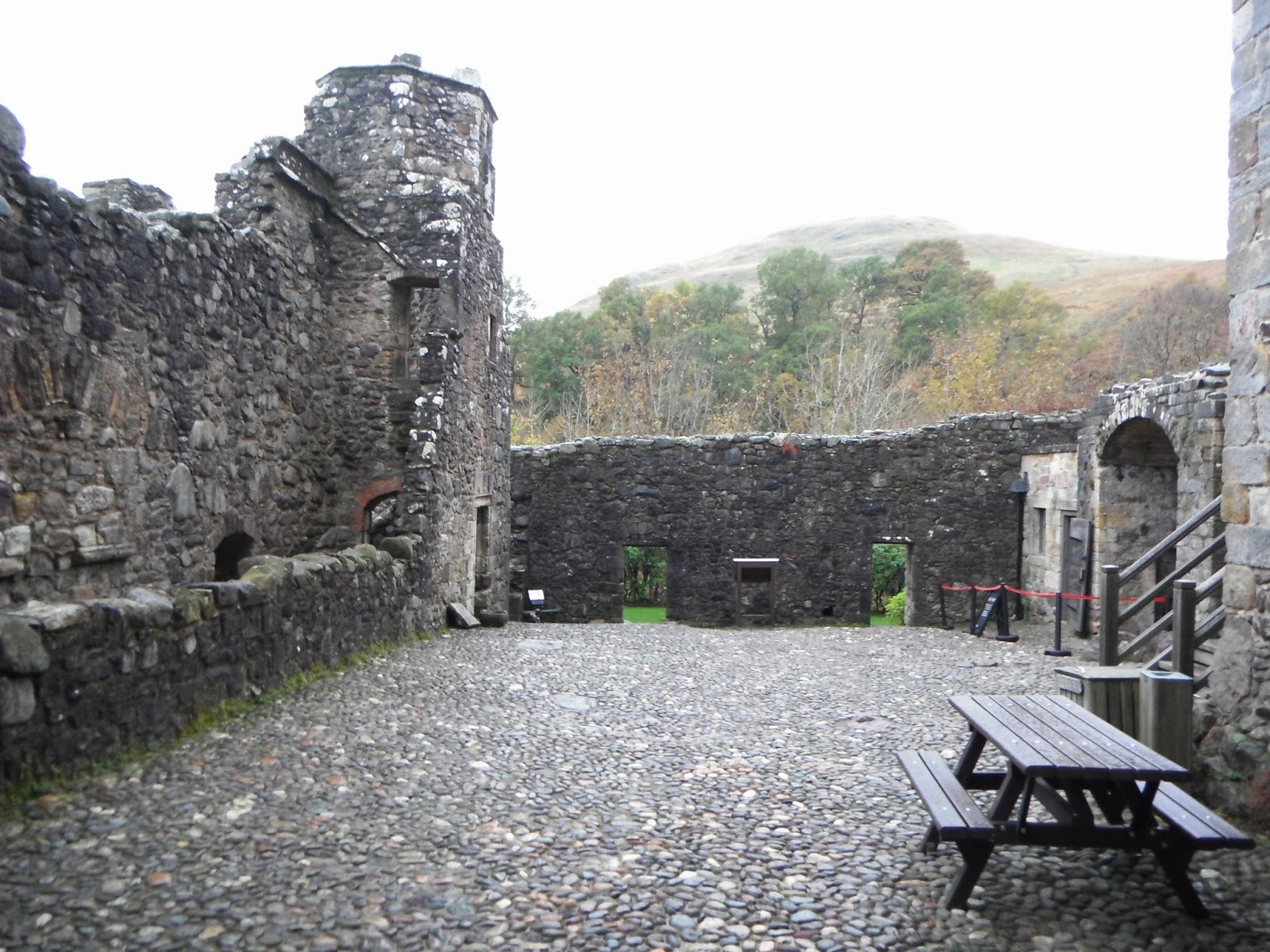
The inner courtyard of the castle.


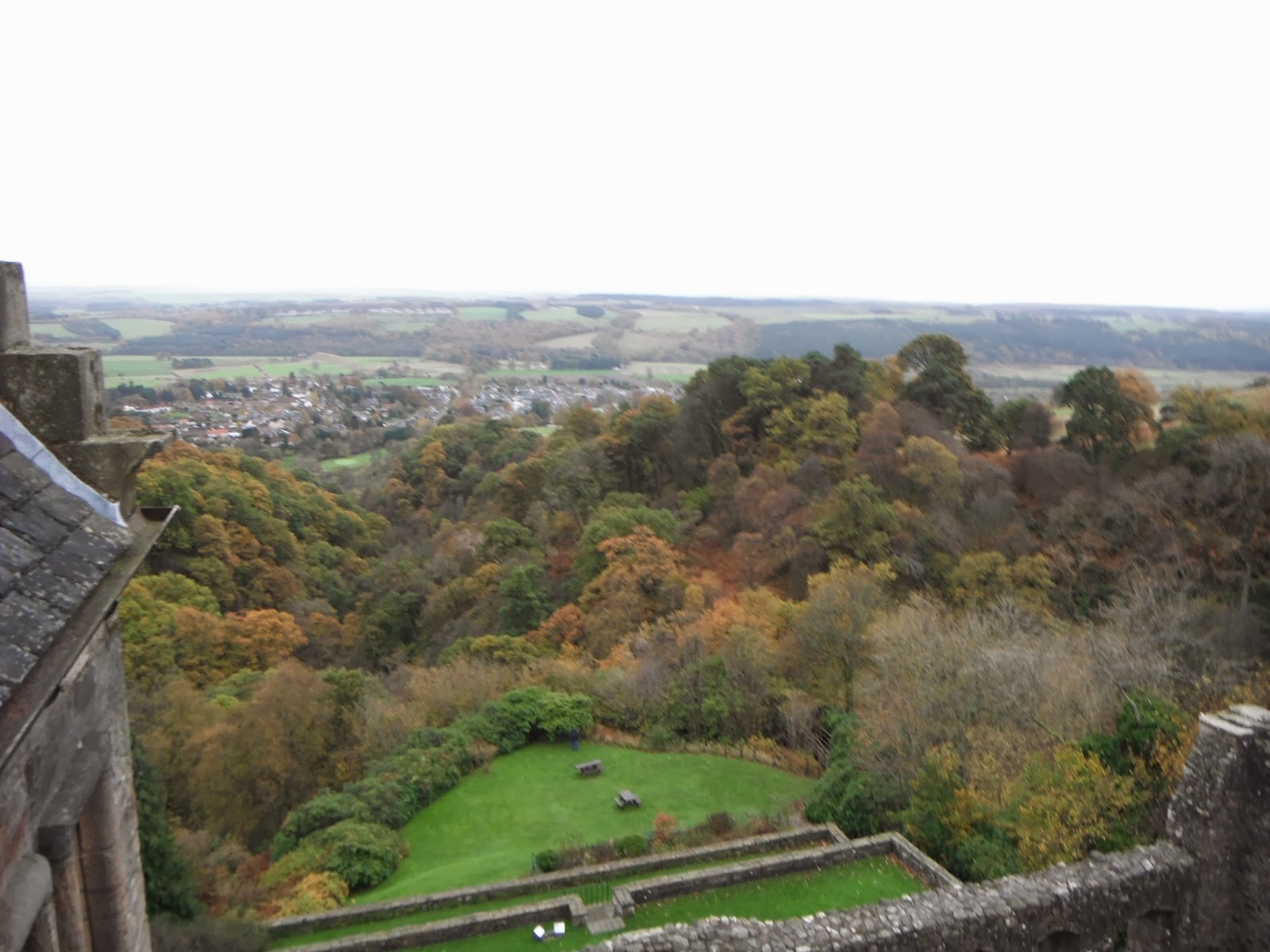
This is the original tower that would have been built in the late 1300s.  They have restored the floors so one can climb up the tower.  At the top is a great view of the valley.
 
 
The view from the roof.  About 15-20 minutes after I took this picture it began raining and it was so heavy that ya couldnee see (that is Scottish for "you could not see") the valley.  It rained the rest of the day very hard.
 

Tuesday, October 29, 2013

We are at the six month mark...


Another week has flown by…we are now at the six month mark – 1/3 of our mission is complete.  We will be home next October.  Last week we went to Birmingham, England for some additional training.  Our “supervisor” is in Birmingham which is the Area Office for the Church in the UK.

 
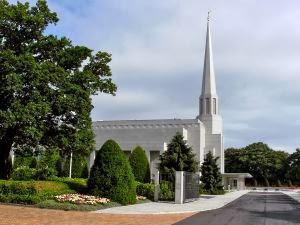
We left on Tuesday and drove to the Preston Temple and spent a few hours there.  It is a beautiful area.  In Preston there is a Stake Centre, the Temple, a Church Distribution Centre, a Family History Centre, and the Missionary Training Centre.  (All the missionaries coming to the UK and Ireland come to Preston for their initial training.)  After a session at the temple we drove to Birmingham for training that was to begin on Wednesday.


                                                           The Preston Temple


Thursday we met a missionary couple who are serving in Birmingham Employment Centre.  We met another missionary couple who are working in London in the Hyde Park Employment Centre.  There was also another couple who attended the training who are from England and live in the Cambridge area.  They work with the Stakes in the Eastern part of England but are not full time missionaries.  It was enjoyable getting to know these other missionaries.

We spent the day on Wednesday learning about the latest changes that are coming in the structure of Perpetual Education Fund & Self-Reliance programs.  We were called as Area Welfare Specialists assigned to an Employment Centre.  The two couples we met - London and Birmingham - were called as Self-Reliance missionaries.  (The Perpetual Education Fund is not available in the UK or Ireland.)  It was very helpful to discuss our assignments with others who are doing the same work we are doing.  We spent most of Thursday in training also.  We learned how to improve our presentations and about a new software program that is being developed to help us find mentors and coaches for individuals searching for employment.  We also learned more about the structure of the education system in the UK –primary school, secondary school, colleges, and universities.  It is very different than the structure in the US.  Colleges are not the same as the colleges we know…they are more like additional classes in high school.  It is a complicated system that maybe I will discuss in a later post.
Thursday afternoon we drove back to Scotland which took about 6 hours.  The traffic around Birmingham was really heavy...I thought we were back in LA.  We both commented how happy we are to be in Scotland and in the assignment we have.  We really have a much more exciting opportunity than the other employment missionaries. 

Fall is definitely here...much wetter weather and the wind has become cold.  It blows in off the North Sea.  The leaves are changing colours and are almost all off some trees.  We went off Daylight Savings Sunday so it is getting dark much earlier.  Only a few months ago I was commenting on how light it was at 10:00 p.m.  Now it is nearly dark at 4:30 p.m.  Winter is coming...
 

Monday, October 21, 2013


Saturday we sent south of Edinburgh to the “Scottish Borders” area to see some amazing history.  The Borders is one of the Council Areas (Counties) of Scotland.  The area is basically surrounded with Edinburgh on the north, Dumfries on the West, the North Sea on the East, and the English border on the South.  This area is rich in Scottish history and the Wars of Independence between Scotland and England were fought in this region. 

There were eight of the senior missionaries on this trip and we first drove to the Leaderfoot Bridge.  The drive was a wee bit wet from the rain, but it was still beautiful as all the fall colors are showing.  This bridge was built in 1780 to provide a connection between the town of Jedbrough and Edinburgh.  The bridge crosses the River Tweed.  This river winds through the borders and for the last 20 miles before it empties into the North Sea it is the border between Scotland and England.


We then drove to the Melrose Abbey.  This abbey was founded in 1136 A.D. by King David I and was the first monastery of the Cistercian order established in Scotland.  The abbey was added to through the centuries.  Most of the abbey was built in the 13th and 14th century and is one of the best preserved abbeys in Scotland.  King Alexandeer II (died 1249) is buried in the abbey.  The abbey is also the burial place of Robert the Bruce’s heart.  His body was interred at the Dunfermline Abbey.  This abbey is regarded as one of the most magnificent examples of medieval architecture anywhere in the British Isles


This is a marker for Robert the Bruce's heart.  There is a heart buried here, but it is not the heart of Bruce.  He was a King and his heart would have been buried in the Abbey.  the marker states.. "A Noble hart may have nane ease gif freedom failye".  Translated it says that a "noble heart cannot be at peace if freedom is lacking".   The symbol on the marker is what was on the lead casket discovered in the abbey.
On his deathbed in 1329, Robert the Bruce asked that his heart should be carried into battle against the "Infidels" because he himself had not been able to go on a Crusade. (Removing internal organs after death was a common practice in those days). Bruce's body was buried in Dunfermline Abbey and when it was exhumed in 1818 it was found that his ribs had been sawn through, indicating that his heart had indeed been taken from his body.
Sir James Douglas is said to have taken Bruce's heart in a casket with him to Spain in 1330 but, in a battle against the Moors, Douglas was killed. Sir William Keith brought Bruce's heart back to Scotland and it was buried in Melrose Abbey.   In 1921, during excavations beneath the Chapter House at Melrose Abbey, a conical leaden casket was discovered. It measured 10 inches high and was 4 inches in diameter at the base but tapering towards the top


Next we drove to Scott’s View.  The view overlooks the winding River Tweed and  was a favorite spot of Walter Scott, the Scottish poet.  According to a popular story, Sir Walter Scott stopped at this point so often on the way to his home at Abbotsford, that his horses would halt without command.  After his death in 1832, his funeral cortège passed this way en route to his burial at Dryburgh abbey, and his horses stopped at his favorite view to allow their master a last look at the Borders landscape. 


Next stop was Dryburgh Abbey.  This abbey was founded in 1150.  It was burned by the English troops in 1322, after which it was restored only to be again burned by Richard II in 1385, but flourished in the 15th century.  It was finally destroyed in 1544   This abbey is the resting place of Sir Walter Scott.


This is the burial spot of Sir Walter Scott


Our last stop was Jedburgh Abbey.  This abbey is situated in the town of Jedburgh and is only 10 miles north of the border with England.  Jedburgh is the largest town between Newcastle and the Scottish capital of Edinburgh.  The abbey dates back to 1118 and King David I of Scotland


It sounds like we drove all day to see these places, but all of this was within about 10-12 miles along highway A68.  It was really an enjoyable day.  Scottish history is so rich.